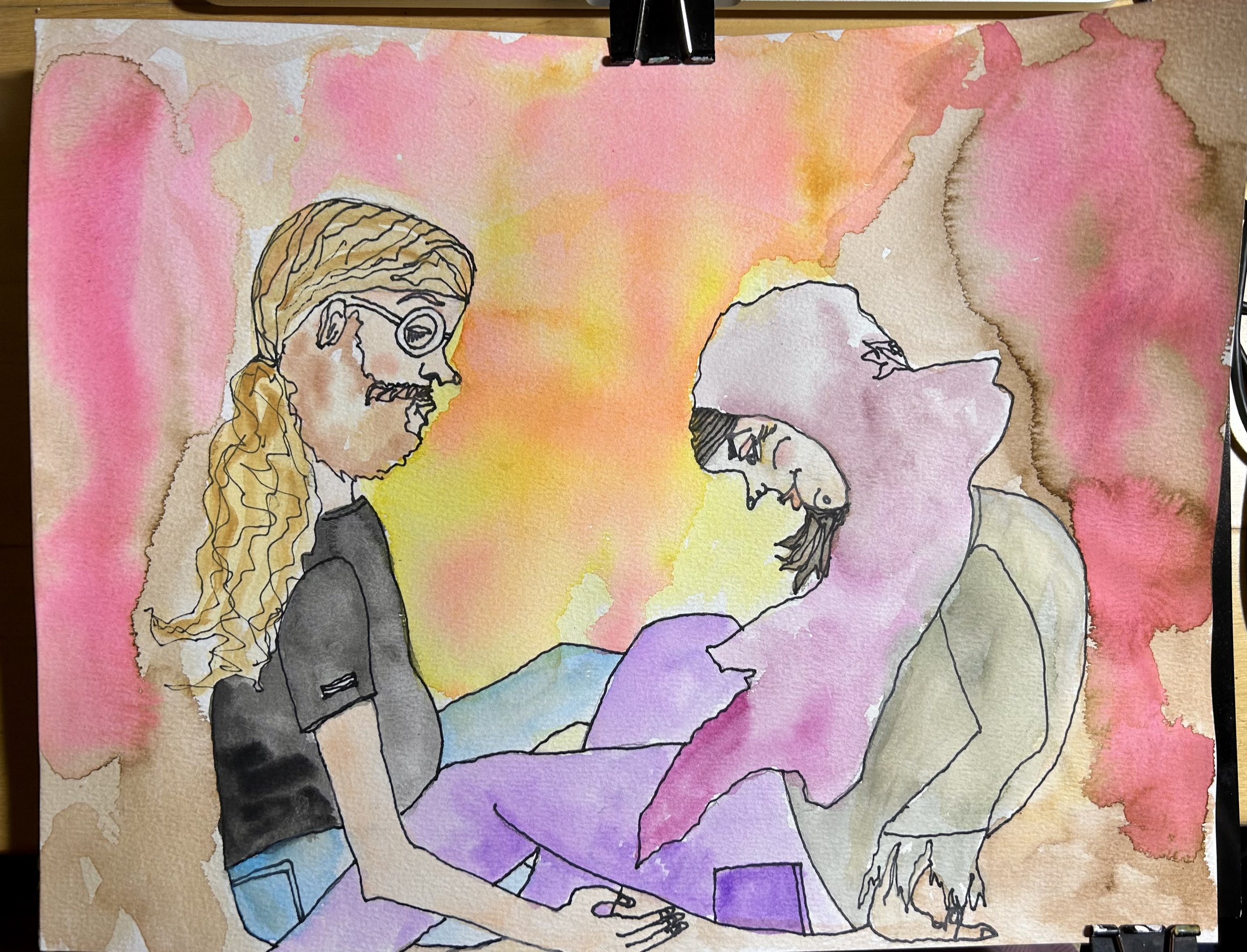
Here’s my first ever art video! The painting is inspired by my husband and I, when we were younger. It is best when played to some reggae or roots music! 🤩

Peppermint Magazine: Ethical Fashion and Fabrics
Peppermint Magazine is an Australian mag that is a real inspiration for eco sewing! I read an article on the website today, and saw photos of men and women sewing clothes in factories. The photos brought me to tears! Anyone who sews knows what it is like to sit at that machine and make garments or items. All the work that goes into a piece, all the headaches too!
Reading about the fact that most of the garment workers from suppliers on down the chain do not make a living wage tugs at my heart. The thing is it takes a bit of leg work to find fabrics and clothing that are ethically sourced. And if you are plus size, it is even more challenging to find ethically created and sourced clothing. For years I thought that just because I was sewing things myself, that I was making a difference as far as some of my clothing not coming from sweatshops. The thing is even at the fabric production level, there is slave labor and people being paid pennies for the work they are doing! In the article it is cited that one woman began making garments as a 14 year old kid, and even now, years later is only making $85 a month!
Here are a couple of links! The first is to the article on Peppermint! It is a must read to figure out ways you can be part of the solution! It is worthwhile to follow the magazine, they send out missives regularly with lots of inspiration for seamstresses. They cover stuff happening in Australia mostly, but it is a very cool read even if you live elsewhere!
Ethical Fashion Article on Peppermint
This second article is a blog post I found that lists ethical sources to buy fabric in the USA/UK. I noticed Mood fabric is on the list, and that is where I plan on buying my fashion fabric going forward! I once believed in buying my fabric second hand on Etsy, but now I notice people are just buying bulk fabric on discount and then reselling it on Etsy. So a better bet is to shop at stores where you can find organic and fair trade fabrics. A notable alternative to sweatshop made fabrics is to upcycle linens and old clothes into new makes! You can thrift all kinds of old sheets and clothing to turn into new garments. Another site I noticed was Spoonflower! You can create your own fabric designs and have them printed on that site! The fabrics are mostly out of my price range, but I’m considering checking them out as well.
Here’s that blog post with the list!
As an eco seamstress, I highly recommend Peppermint Magazine for all kinds of incredible content, sewing inspiration and insights into sustainable beauty and fashion!
Redefine Creativity
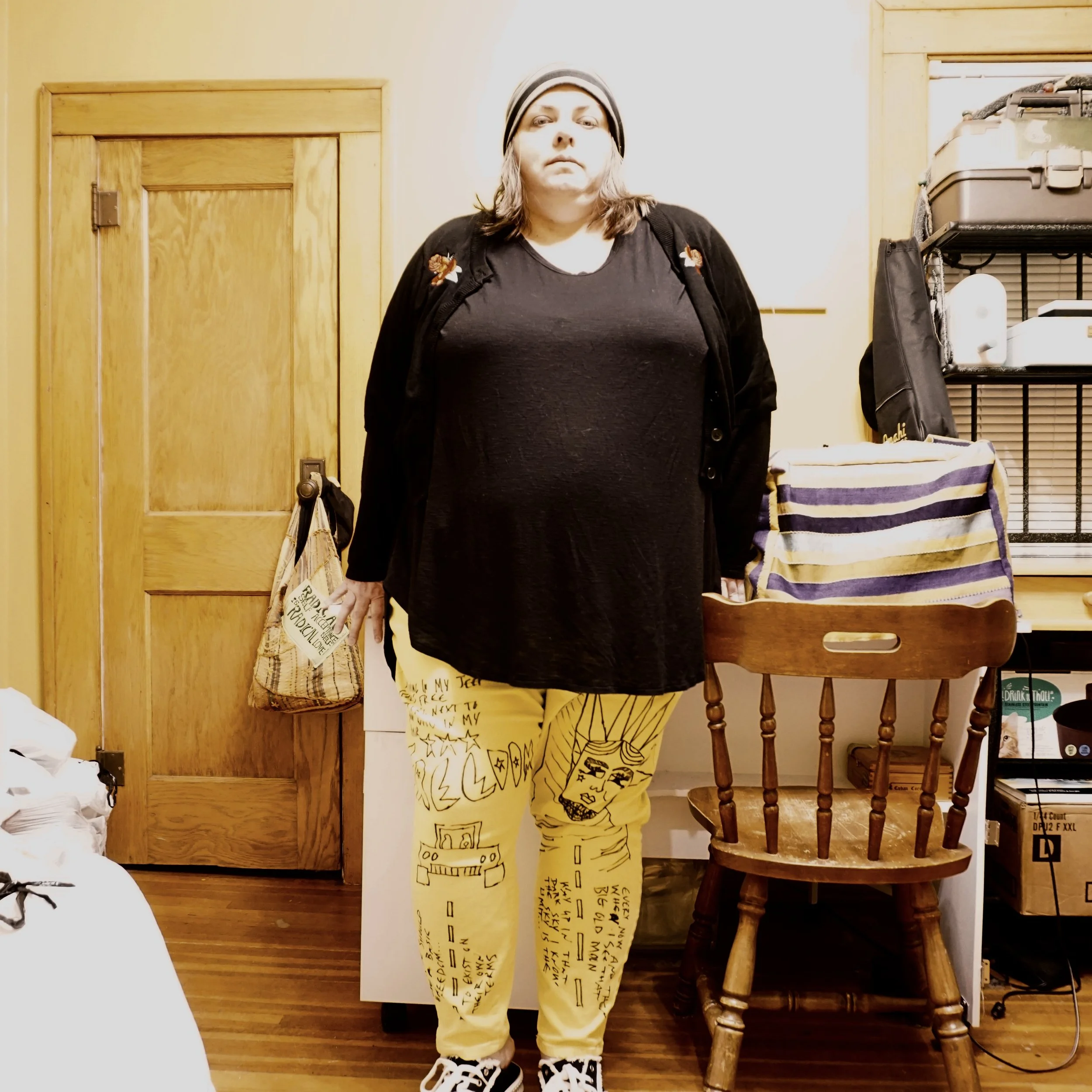
I’ve been a fan of Alisa Burke for years! I’ve signed up for tons of her classes, and some of them have inspired entire series of paintings. For the New Year, I signed up for one of her vintage classes called “Redefine Creativity”. The class is about drawing and painting on unusual objects and surfaces instead of just paper or canvas. I’m really excited to start some surface design on the clothing I make! So I started by drawing on a pair of jeans. It was a really fun project, although it did take a bit of courage to actually try it out. I waited for just the right evening when I was bored and needed some adventure.
Alisa Burke also has another class called “Beneath the Surface”, as well as two books that talk about surface design on canvas by the yard and fabric. I have both of her books and signed up for the class some years ago, but never really dove in all that much. For some reason I’ve been hesitant to combine my art craft with my sewing. So perhaps this might be the year when I do more of that!
What I love the most about Alisa Burke classes is that I can dip in and out of the material over the years, and each time I do I learn a little something new or find some fresh inspiration. The secret is to put your own twist on her concepts. That way you wind up creating something totally original. My biggest secret for honing my craft over the years has been to learn some techniques here and there, try out different things but then refine and come back to what feels most true to me. Alisa Burke classes are a great way to discover entire new creative avenues! And the classes come at all different price points to meet you where you are at.
Sew a Simple Leafy Reversible Table Mat
in Sewing
Apologies to Mom, because this is one of her birthday gifts for her upcoming December birthday! I have been waiting to share it on the blog, but turns out I’m not going to see her until late Winter.
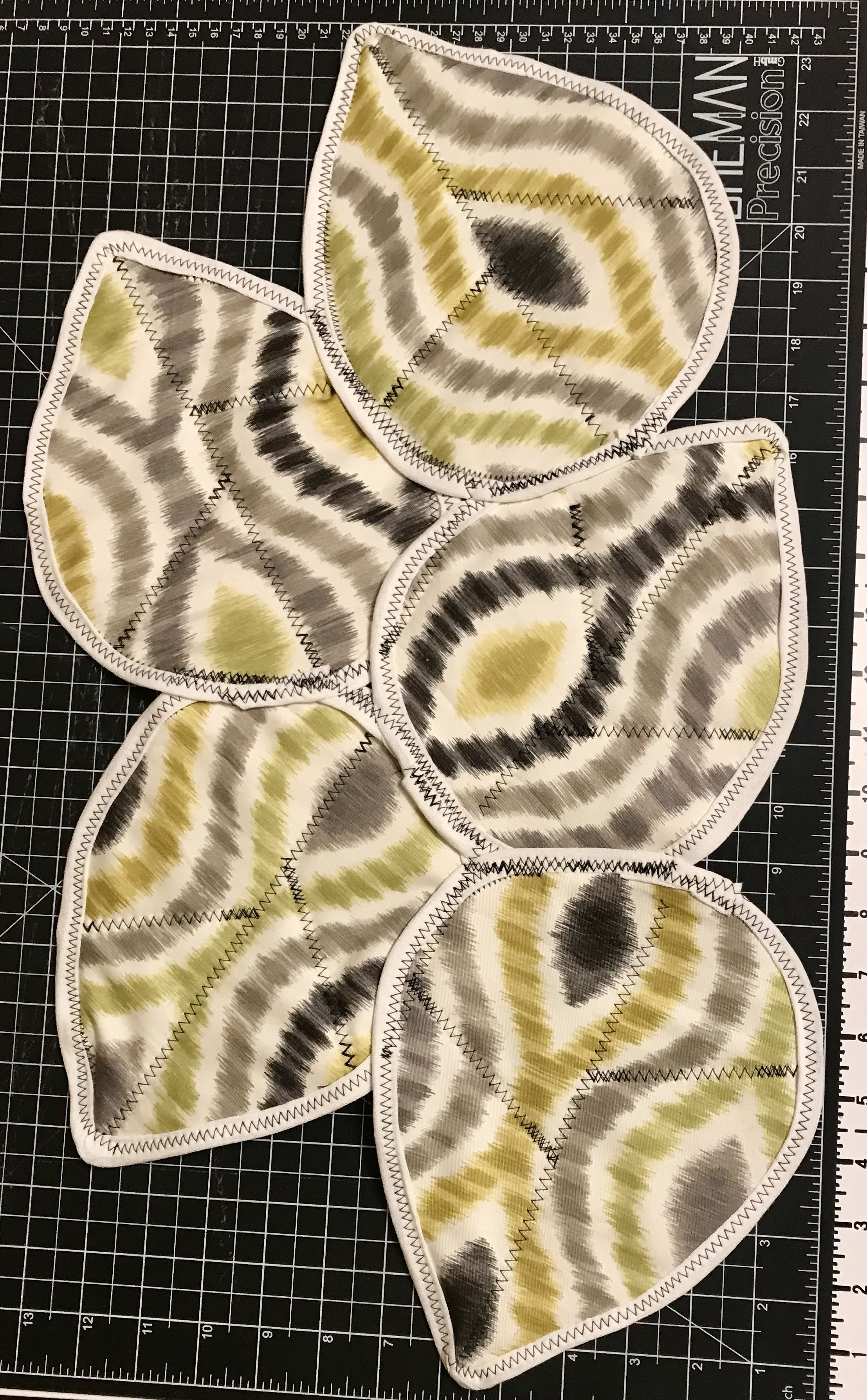
This simple table mat came together in a few sittings! I just thought a quick tutorial was in order, because holidays are fast approaching! This mat is the perfect hostess or mother-in-law gift…especially for those women who seem to have everything.
Materials
Two fabrics, one green and one brown
Neutral color binding, preferably in a stretch knit
Batting
Basic sewing kit
paper, scissors and marker for template
Step One: Create a leaf template. Aim to make the leaf approximately half of the measurement of the finished table mat.
Step Two: Trace the template onto the green fabric. I did five leaves, but you could easily do only three or add more for a larger mat. Then cut out the fabric leaves.
Step Three: Sew the leaves onto batting with a wide zig zag stitch. Then cut around the leaves to remove excess batting.
Step Four: Sew those leaves onto the brown backing fabric, with right sides facing out. Cut around the leaves again, and be sure to round out the tip a little for the next step!
Step Five: Attach binding around each leaf. Then, sew the leaves together in a pleasing design.
So easy! Make one or make a bunch! Check your list then check it twice for all those women on your list!

Three Tips for Working With Vintage Linens
in Sewing
I know a lot of eco seamsters use organic cotton and other eco friendly materials in their sewing projects, but I still love vintage and thrifted first over brand new. I recently picked up some vintage sheets, and this gorgeous embroidered tablecloth all from the 60’s, and what I love most about them is all the potential they hold! Vintage sheets and tablecloths are great for backing quilts, but they can also be used to sew dresses, skirts, tops and more! Home decor projects like curtains and pillows would also be a great use of these vintage treasures. They are especially good for quilt backing, because the fact that they are already big enough to cover a bed means that you don’t typically have to sew more than one piece together to create the quilt back.
Here are a few tips for working with pre loved linens!
Vintage tablecloths and sheets come in all different types, and they often get a lot of wear and tear over the years. The tablecloth I bought has stains and a lot of them have holes or tears. Make sure to read the fine print or ask questions first before buying, so you know what you are going to receive. If shopping in a local thrift store, be sure to open up the linens and inspect them before buying. You can always use applique to cover stains or mend holes, so search with an open mind to see what ideas you can come up with!
Wash vintage sheets and tablecloths in a very basic detergent. I got All unscented and clear, with stain fighters. I do not hand wash anything, I always just throw vintage linens in the machine on gentle and hope for the best! Dry everything on low, or air dry if you have a clothes line. Hand embroidered pieces might need a touch of delicacy when it comes to washing. Consider what you will be making with the fabric before washing, because some items are just a pain to wash by hand.
When you are looking for vintage linens, it pays to think about it like yardage! The sixties tablecloth I purchased was about $25, but it also has hand embroidery all over the edges. I found another table cloth that was much smaller, and that seller also wanted close to twenty bucks! But when I looked at the size, it was only a little bigger than a yard of fabric. Even though a linen is old doesn’t necessarily mean it is worth a ton of money! So compare the size of the linen in question to the measurement of a yard to make sure you are getting your money’s worth.
I can’t wait to get these beautiful linens in the wash and onto my sewing table! I hope these tips help you in your own quest for eco fabric!